
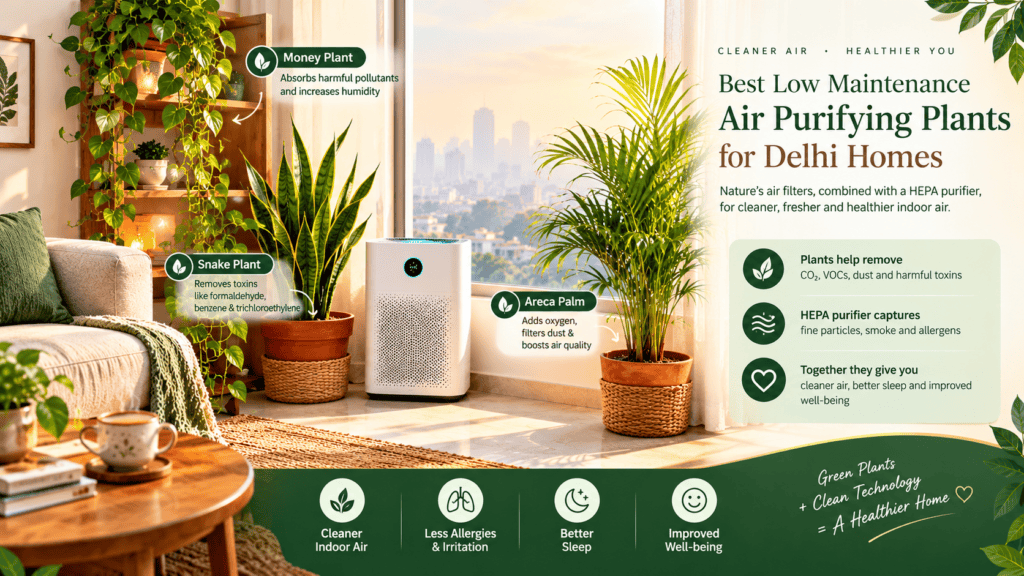
If you’ve stood in a Delhi living room in November, you know the scene. The AQI crosses 400, the purifier hums day and night, the haze presses against the window, and you thing about some air purifying plants for Delhi homes then a relative forwards a WhatsApp message saying one snake plant will fix everything.
It won’t. But plants still deserve a spot in your home, and the right ones are far easier to keep alive than most people think. This guide covers the best low maintenance air purifying plants for Delhi homes, what the research honestly says about them, and how to keep them healthy through 45-degree summers, damp monsoons and smoggy winters.
We’re Greenlawn, a home gardening service in Delhi. We’d much rather you bring home five plants that thrive than fifteen that sulk.
Do air purifying plants actually work?
Short answer: a little, but not the way the headlines make it sound.
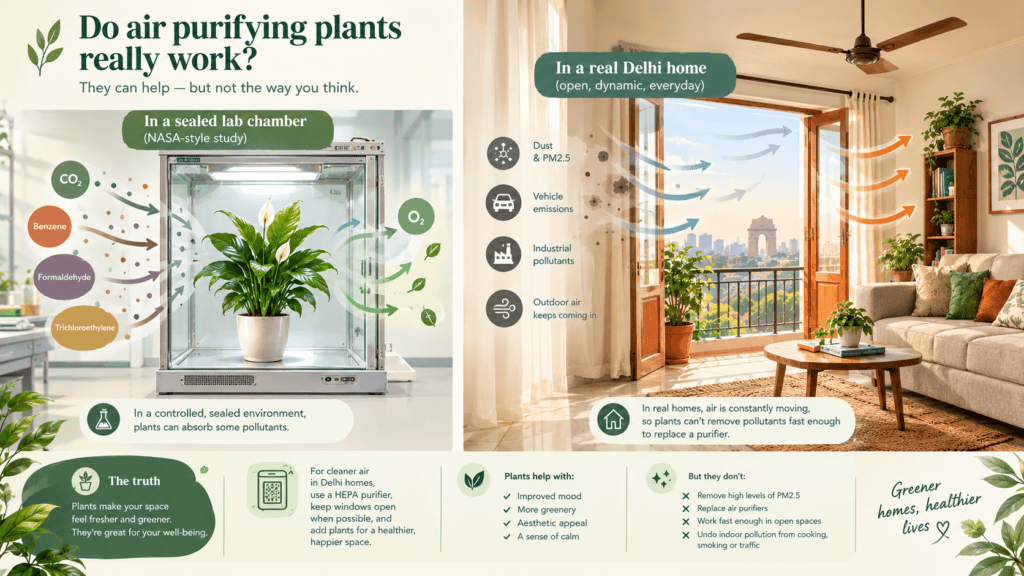
The whole idea goes back to a 1989 NASA study. Researchers put plants inside small, sealed chambers and found they absorbed chemicals like formaldehyde and benzene. That result is real. The catch is that your home isn’t a sealed chamber. Doors open, fans spin and air slips in and out all day long.
A 2019 review in the Journal of Exposure Science and Environmental Epidemiology looked at the evidence and found you’d need an unrealistic number of plants, somewhere between ten and a thousand per square metre of floor, to match what ordinary ventilation already does. And Delhi’s biggest problem, fine particles like PM2.5 from traffic, construction and crop burning, isn’t something a pot plant can remove in any meaningful way.
So think of plants as a lovely extra, not a replacement for a purifier. During smog season, a good purifier does the heavy lifting. What plants bring is different: greenery, a touch of humidity, leaves that catch some dust before it settles on your shelves, and a room that simply feels calmer. For plenty of people, that’s reason enough.
What makes a plant right for Delhi?
Delhi is a tough place to be an indoor plant. Balconies cross 40°C in summer, winters bring smog and chilly nights, the air stays dry for much of the year, and tap water is often hard. Many flats also get limited natural light.
So when we pick indoor plants for Delhi pollution-season living and the rest of the year, we look for four things:
- It copes with low to medium light.
- It forgives a missed watering.
- It handles dry air.
- It survives big temperature swings.
The eight plants below tick most of those boxes.
The best low maintenance air purifying plants for Delhi homes

Here are our eight hardiest picks, starting with the easiest.
1. Snake plant
If you only buy one plant, make it this one. It handles low light, dry air and weeks of neglect, which is why it’s a Delhi favourite. For snake plant care in Delhi, water every two to three weeks (a little more often in peak summer) and let the soil dry out fully between drinks. Repot only when the roots start cracking the pot. It’s toxic if chewed, so keep it away from curious pets.
2. Money plant (pothos)
A trailing classic that grows happily in soil or in a jar of water. It tolerates low light and bounces back from mistakes. Water when the top inch of soil feels dry, trim the vines now and then to keep it bushy, and wipe the leaves so dust doesn’t dull them. It’s toxic to pets if eaten.
3. Spider plant
Easy, cheerful and one of the safer choices if you have cats or dogs. It likes bright, indirect light and steady moisture, and it sends out baby plants you can pot up for friends. Brown tips are common with Delhi’s hard water, so use filtered water if you can.
4. Areca palm
This is your full tropical look. Give it a bright spot without harsh afternoon sun, and water when the top few centimetres of soil dry out. It drinks more than the others on this list. It’s generally considered pet-safe, but in dry winter air, check the leaf tips for mites.
5. Peace lily
A shade lover that tells you exactly when it’s thirsty. It droops dramatically, then perks back up within hours of a drink. With decent light it will even flower indoors. Keep it out of direct sun and away from pets and children, as it’s toxic.
6. Rubber plant
Big, glossy leaves make a statement, and they also catch plenty of dust, so a weekly wipe with a damp cloth pays off. Give it bright, indirect light and water when the top few centimetres are dry. The sap can irritate skin and is mildly toxic to pets.
7. ZZ plant
Slow, steady and very tough. It stores water in thick underground rhizomes and shrugs off low light, so it’s perfect for dim corridors and bedrooms. Water every two to three weeks. Like most plants here, it’s toxic if eaten.
8. Aloe vera
The sun-lover of the group. Give it a bright window or a balcony, let the soil dry out completely between waterings, and don’t leave it sitting in monsoon rain. It’s toxic to pets if eaten.
A quick word on tulsi. Plenty of Delhi homes keep one, and it’s a lovely plant. But it needs four to six hours of direct sun and does far better on a bright balcony than indoors. Grow it for the sunlight and the tradition, not for air cleaning.
Quick comparison table
Watering frequencies are a starting point. Always check the soil with your finger first.
| Plant | Light | Watering | Pet-safe? |
|---|---|---|---|
| Snake plant | Low to bright | Every 2 to 3 weeks | No |
| Money plant | Low to medium | Weekly, when the top inch is dry | No |
| Spider plant | Bright, indirect | Weekly | Yes |
| Areca palm | Bright, indirect | Twice a week in summer, less in winter | Yes |
| Peace lily | Low to medium | Weekly | No |
| Rubber plant | Bright, indirect | Every 7 to 10 days | No (mildly toxic) |
| ZZ plant | Low to bright | Every 2 to 3 weeks | No |
| Aloe vera | Bright, some direct sun | Every 2 to 3 weeks | No |
Caring for your plants through Delhi’s seasons
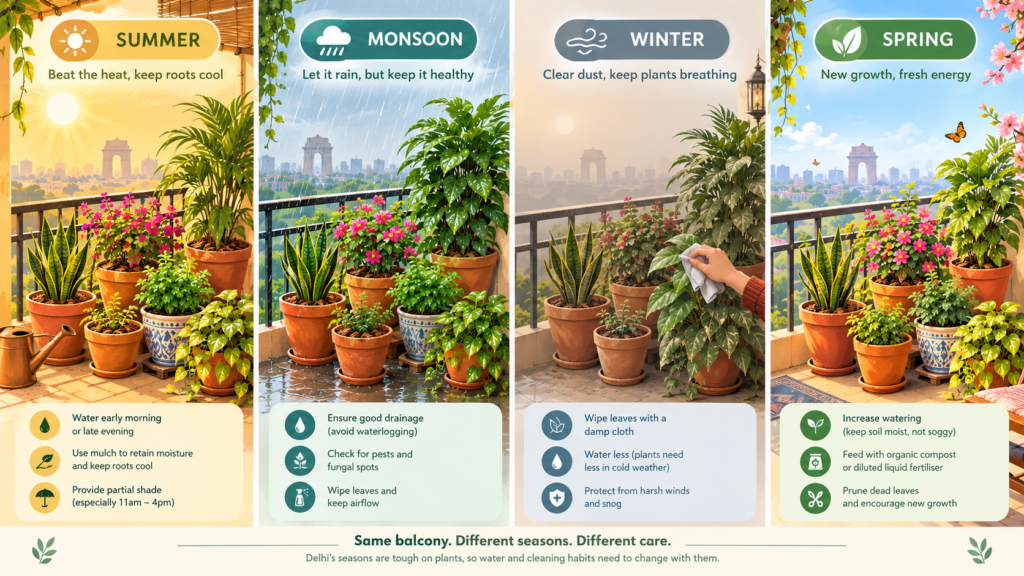
Summer (April to June): Pull plants back from hot, west-facing glass and water in the morning. Group pots together so they humidify each other, and add a layer of mulch to balcony pots to keep the roots cooler.
Monsoon (July to September): Water less, because the humidity is doing half the job. Give plants some airflow to avoid fungus, and watch for yellow leaves and soggy soil.
Winter and smog season (October to January): Dust coats the leaves and blocks light, so wipe them with a damp cloth every week or two. Growth slows down, so water less. Keep plants away from heaters, and bring tender ones in from cold balconies at night. If you’re choosing plants for a Delhi balcony, this is the season to be most careful.
A five-minute weekly routine
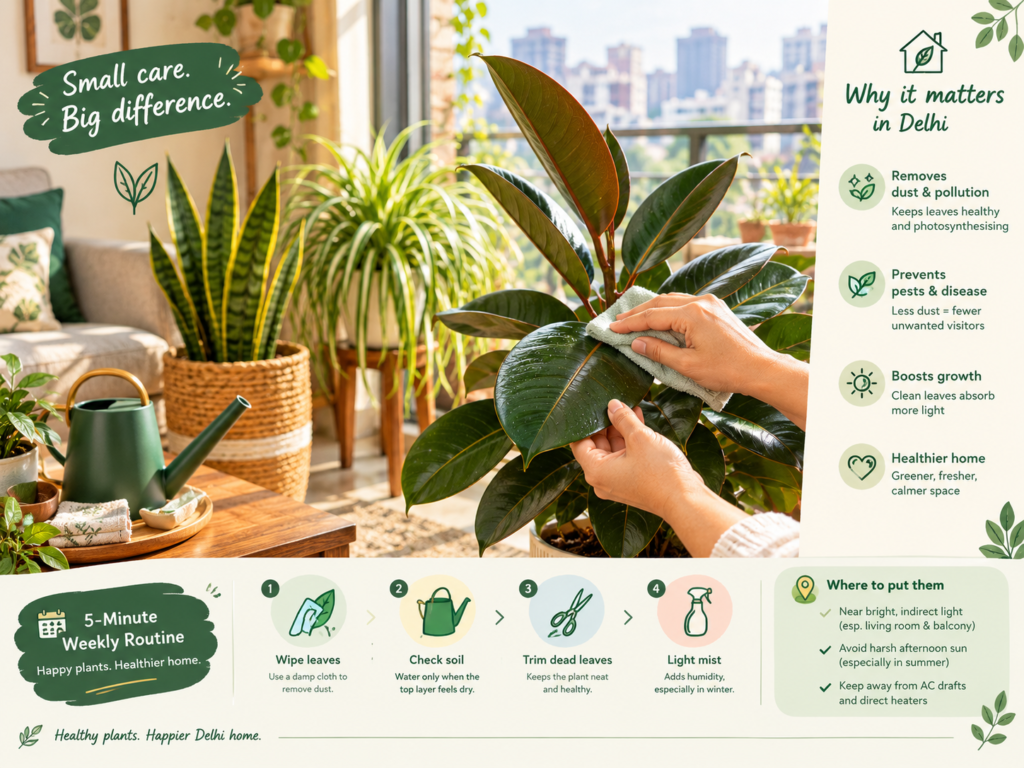
Pick one day, say Sunday, and run through this:
- Check the soil with a finger before watering anything.
- Wipe the leaves of your big-leaved plants with a damp cloth.
- Turn each pot a quarter so growth stays even.
- Remove any yellow leaves.
- Peek under a few leaves for pests like mealybugs or mites.
That’s it. Five minutes a week beats an hour of panic once a month.
Where to put them
One or two medium plants per room is plenty. Rubber plants and areca palms suit a bright living room, while snake and ZZ plants cope happily in a bedroom corner. A peace lily is content in a bathroom with a window, and a spider plant looks great hanging in the kitchen. Aloe Vera and tulsi belong on a sunny balcony. Whatever you pick, choose a pot with drainage holes.
Mistakes to avoid
- Overwatering. Most indoor plants die from too much water, not too little.
- Skipping drainage. Pots without holes trap water and rot the roots.
- Moving plants straight into harsh sun. Introduce brighter light gradually over a week or so.
- Expecting a purifier. Plants won’t clear smog, so keep your filter running.
- Ignoring the dust. Dirty leaves photosynthesise less.
Need help choosing the right plants?
Picking plants for your light, layout and lifestyle is much easier with someone who knows Delhi conditions. Greenlawn provides home gardening services across Delhi, including plants, pots, tools, and balcony and terrace gardening. Our weekly and monthly plant care plans mean a caretaker handles watering, pest checks and leaf cleaning, and we can build a custom plan around your space.
If you’d like the best low maintenance air purifying plants for Delhi homes set up properly, get in touch and we’ll help you choose.
Frequently asked questions
Which air purifying plant is best for Delhi homes?
Snake plants, money plants and areca palms are popular, hardy choices. Just remember that none of them will clean the city’s air in any serious way, so pair them with a purifier on high-AQI days.
How many plants do I need to purify a room?
There isn’t a realistic number. Research suggests you’d need far more plants than any home can hold to match normal ventilation. Choose plants for greenery and wellbeing, and rely on a purifier for pollution.
Can plants remove PM2.5?
Not meaningfully. Leaves can trap some dust, which is why wiping them matters, but a HEPA purifier and closed windows on bad-air days work far better.
Which indoor plants are safe for pets?
Spider plants and areca palms are generally considered non-toxic to cats and dogs. Many others on this list are not, so keep them out of reach and check the ASPCA plant list if you’re unsure.
Do air purifying plants need sunlight?
Yes, all plants need some. Snake plants and ZZ plants tolerate low light, but most others prefer bright, indirect light near a window.
Final thoughts
Plants won’t clear Delhi’s smog, and anyone who says otherwise is overselling. What they can do is make your home greener, a little more humid and a lot nicer to live in. Start with two or three of the best low maintenance air purifying plants for Delhi homes, look after them through the seasons, and let a purifier handle the heavy lifting.