
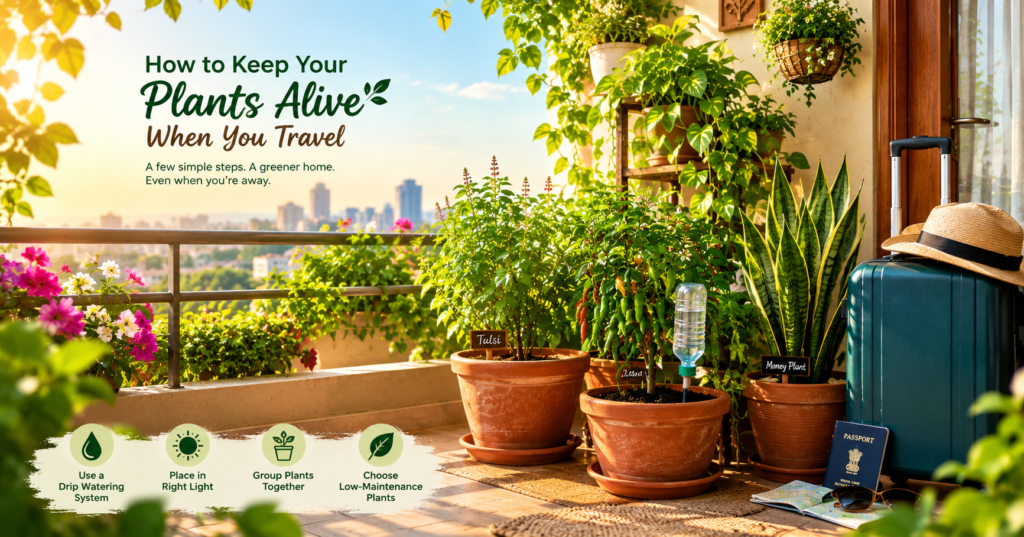
Two days before a trip, the same thing happens to almost everyone. The bags come out, the to-do list grows, and somewhere between “charge the power bank” and “tell the milkman”, you remember the plants.
The tulsi that finally took off. The money plant that survived your last house move. The chilli plant with three green fruits that need another week.
Take a breath. Knowing how to keep plants alive when you travel is less about gadgets and more about timing. Do a few small things in the right order and most plants will sit out a week or two without complaint.
We’re Greenlawn. We look after balcony and terrace gardens across Delhi, so we know what a holiday can do to a neglected pot: crispy leaves, a sulking tulsi, soil dried to a brick by day three. Nearly all of it is avoidable. Here’s how.
What actually goes wrong while you’re away
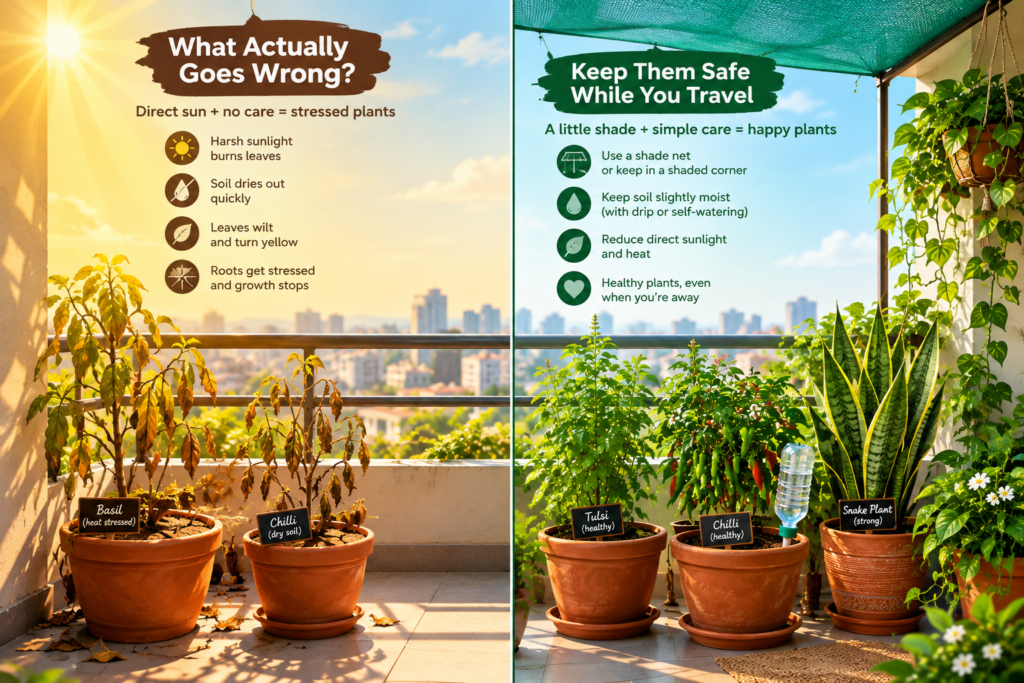
Plants rarely die because you forgot about them. They die because heat bakes a small pot dry, or a last-minute flood of water rots the roots, or a sunny window turns a closed-up flat into a greenhouse. Sort out those three and you’ve solved most of the problem.
How long can plants go without you?
It depends on the plant, the pot and the season, but this is a fair rule of thumb.
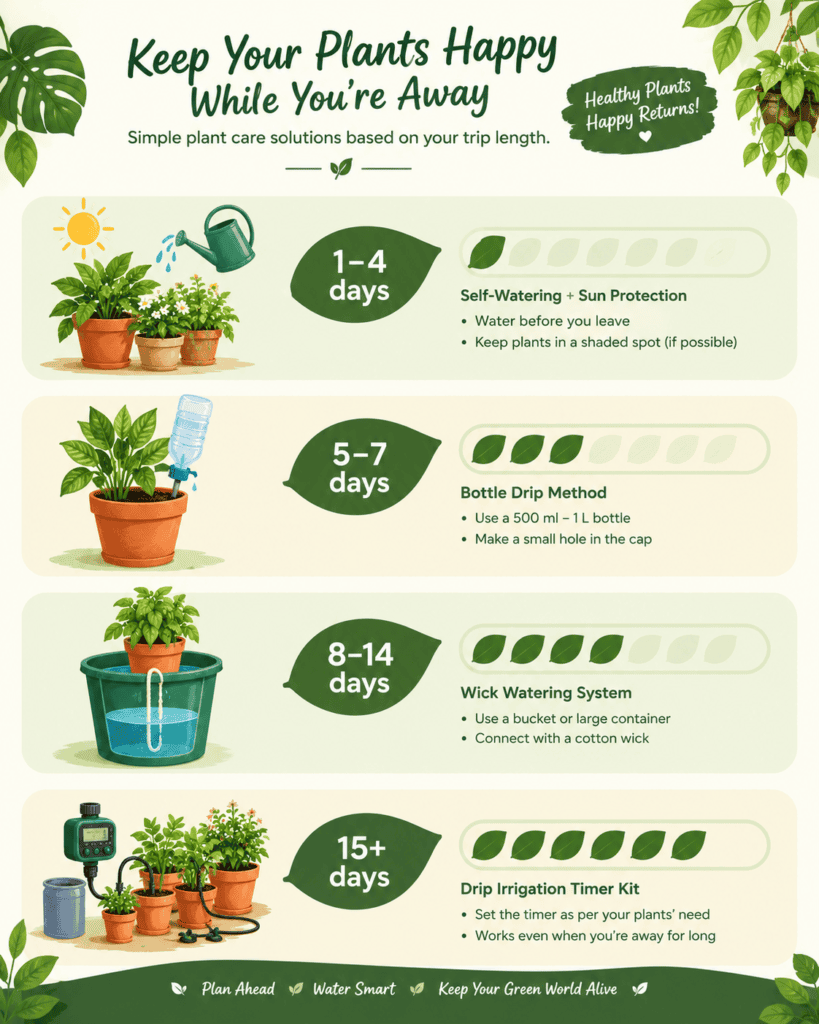
| Time away | What usually works |
| 1 to 4 days | Water well the day before and move pots out of direct sun. Most plants will be fine. |
| 5 to 7 days | Add a slow-watering setup (a bottle drip or a wick) and a layer of mulch. |
| 8 to 14 days | Slow watering for every pot, plus one check-in from a friend if it’s summer. |
| 15 days or more | A drip system with a timer, or regular visits from someone who knows plants. |
Succulents, snake plants and ZZ plants forgive almost anything. Tulsi, herbs and anything in a small pot do not, especially between April and June.
A week before you leave: tidy up
Start a few days early. None of this takes long.
- Check under the leaves. A few aphids or whiteflies become a full infestation when nobody’s watching. Spray with neem oil now, so you can see it worked before you go.
- Prune. Snip off yellow leaves and finished flowers, and pick any fruit that’s nearly ripe.
- Skip the fertiliser. Fast growth needs more water than you’ll be around to give.
- Don’t repot. Repotting is a shock. Let plants settle first.
The day before: water well, not wildly
This is where most people go wrong. The urge to drown everything the night before is strong, and it backfires, because soggy soil invites root rot, especially in the monsoon.
Water slowly until it runs out of the drainage holes. Wait ten minutes, then tip out whatever is sitting in the saucer. You want evenly damp soil, not a swamp.
Move plants to a safer spot
Indoors, pull plants about a metre back from sunny windows. Glass magnifies heat, and a shut-up flat gets hot. Bright, indirect light is ideal, but don’t shut plants in a dark room, because they still need light.
On the balcony, move pots to a corner with gentle morning sun and shelter from the afternoon. A cheap shade net helps a lot from April onwards.
Wherever they end up, cluster them together. Leaves give off moisture, so a group makes a slightly more humid pocket and slows drying.
Five easy ways to water plants while you’re on vacation
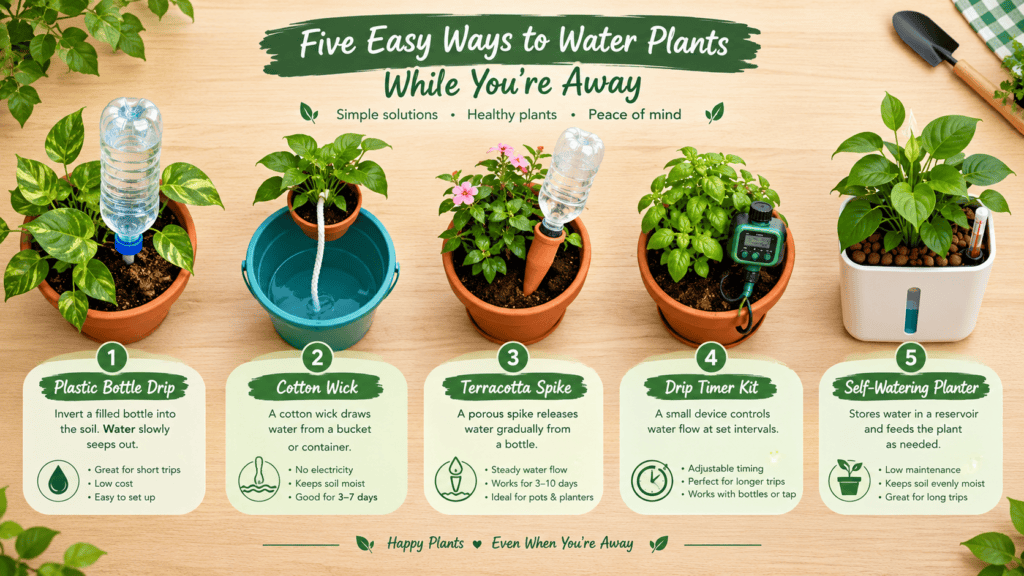
You don’t need all five. Choose the one that suits your plants and your trip.
1. The bottle drip
Poke one or two tiny holes in the cap of a clean plastic bottle, fill it, and push it upside down into the soil. It’s cheap and takes two minutes. Test it for a day first, and if it empties in a few hours, make the holes smaller.
2. The wick method
Stand a bucket of water next to your plants. Bury one end of a thick cotton cord a few inches in the soil and drop the other end into the water. The soil draws up only what it needs, which makes this a good fit for indoor plants and small pots.
3. Terracotta spikes and ollas
Terracotta spikes screw onto a bottle and release water slowly through the clay. An olla is the bigger version, an unglazed pot buried in the soil and kept full. Both suit vegetable planters.
4. A drip system with a timer
For a big terrace, or a trip longer than two weeks, a drip irrigation kit with a battery timer is worth the money. Run it for a few days before you leave to catch any leaks.
5. Self-watering pots
A reservoir at the bottom feeds the soil. Fill it just before you leave and test how long a full tank lasts, because it varies between pots and plants.
Whichever you pick, finish with a layer of mulch about as thick as your thumb. Dry leaves, coco chips or straw all work, and they keep roots cooler, which matters in a Delhi summer.
What different plants can handle
- Succulents, snake plants and ZZ plants: a good soak is often enough for two to three weeks.
- Money plants, pothos and spider plants: fine for about two weeks with a bottle drip or a wick.
- Tulsi, herbs and leafy greens: thirsty and quick to wilt. They need a reliable system or a visitor every few days.
- Tomatoes, chillies and roses: keep moisture steady, and pick fruit and cut back flowers before you go.
If a friend is helping, write it down
A well-meaning friend with a jug can do more harm than a dry week, because most people overwater out of kindness. Send a message covering which plants need water and which don’t, how much to give (a small mug, not a bucket), how to check (a finger two inches into the soil, water only if it feels dry), and who to call if something looks wrong. A few photos of each plant help too.
Looking for the best gardening services in Delhi?
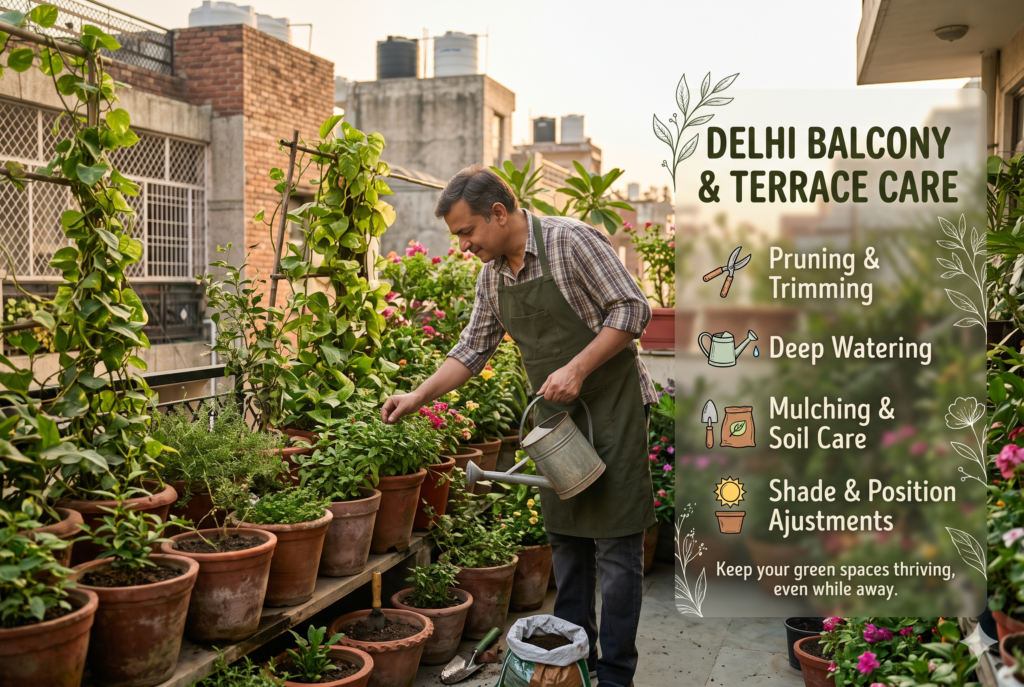
Sometimes a friend’s goodwill isn’t enough. Maybe you’re away for a month, the terrace holds dozens of pots, or a few plants would be heartbreaking to replace.
If you’re comparing the best gardening services in Delhi, ask three things. Will someone visit on a regular schedule? Will each plant be watered for what it actually needs, not on a fixed routine? Will problems like pests be spotted early and reported to you?
At Greenlawn, we provide home gardening services in Delhi, from balcony and terrace gardening to pots, plants and tools. Our weekly and monthly plant care plans mean a caretaker visits regularly, waters, checks for pests and keeps things tidy while you’re away. If your garden has unusual needs, we can build a custom plan around it. Get in touch before you book your tickets, and you’ll come home to a garden that’s still thriving.
Your last-day checklist
- Pruned, and checked for pests
- Watered deeply, saucers emptied
- Pots moved out of harsh sun and grouped together
- Watering setup tested
- Mulch added
- Friend or caretaker briefed
When you get back
Your plants may look a bit tired. That’s normal. Remove yellow or dried leaves, check for pests, and water gently if the soil is dry. A very parched plant gets a normal drink, then another a few hours later, rather than one big flood. Hold off on fertilizer for about a week. Most plants recover within days, and a few reward you with fresh growth.
Frequently asked questions
How long can plants survive without water?
Most common houseplants manage one to two weeks if they’re well watered beforehand and kept out of direct sun. Succulents, snake plants and ZZ plants can last three weeks or more. Herbs and vegetables in small pots may need water every day or two in a Delhi summer.
Should I water my plants before I leave?
Yes. Water thoroughly the day before, let the excess drain and empty the saucers. The soil should be evenly damp, not waterlogged.
Do self-watering pots really work?
For short and medium trips, yes. Fill the reservoir just before you go and test how long it lasts with your plant.
Who can look after my plants in Delhi while I travel?
A friend or neighbour can handle a short trip with clear instructions. For longer trips, or for large balcony and terrace gardens, a gardening service like Greenlawn offers weekly and monthly plant care plans.
Final thoughts
Going away shouldn’t mean worrying about your plants the whole time. Prune, water well, move the pots somewhere gentler and set up a simple drip or wick. And if you’d rather hand it all over, Greenlawn is happy to look after your garden while you enjoy the trip. Happy travels, and happy growing.